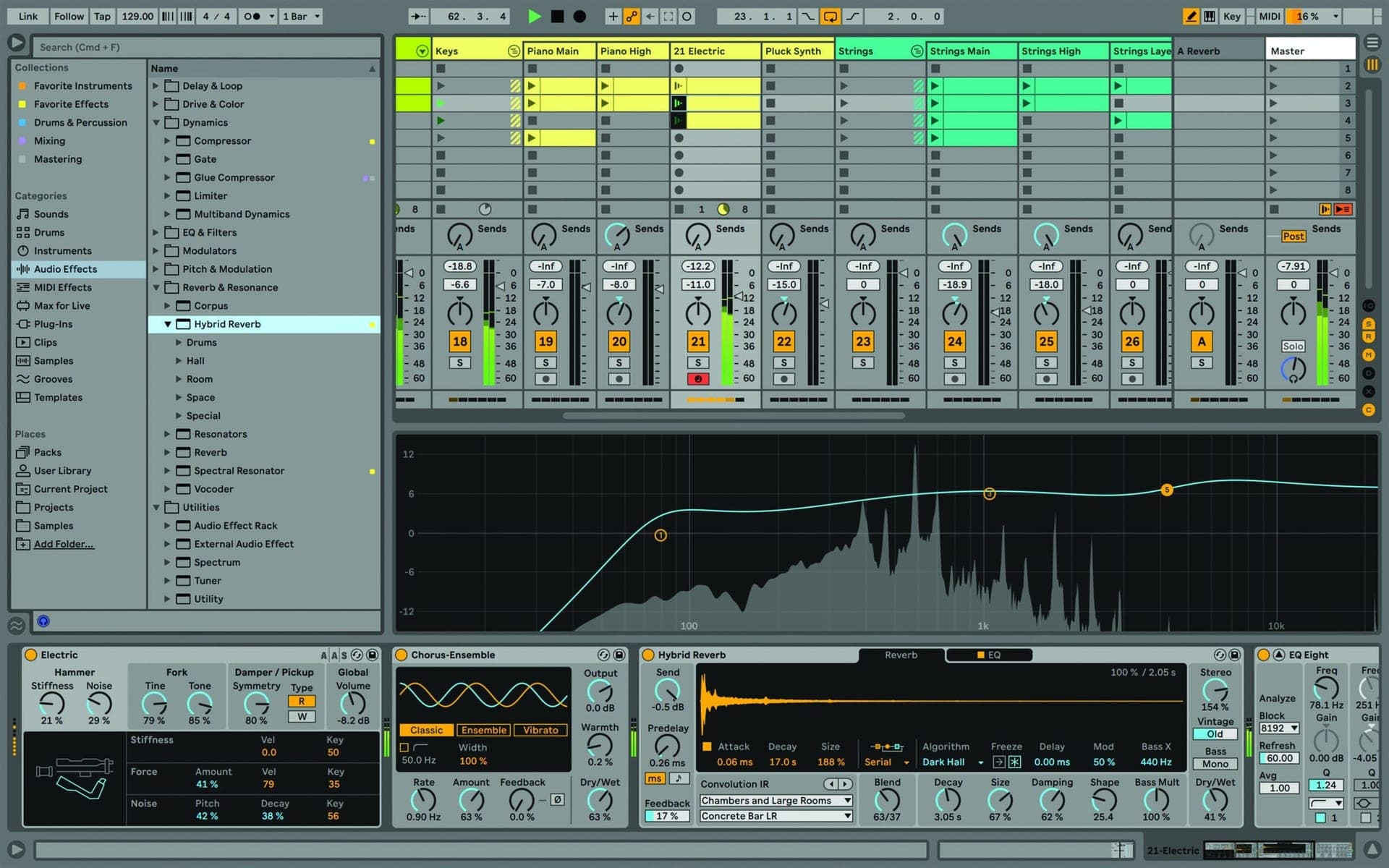
Ableton Live Course | Lisbon
Ableton Live Music Production Course | Lisbon

Let's Go!
- →Getting set up: Audio and the preferences window
- →Session view vs. Arrangement view: applications of each
- →Live concepts: clips / scenes / browser / library
- →The concept of Ableton’s unique warp engine
- →Launching clips
- →Intro to FX
- →Intro to instruments
- →What sets Ableton apart from other DAWs?
Creating With Audio & MIDI
- →Quantizing audio
- →Clips: clip view and clip properties
- →Making beats with Drum Racks and Simpler sampling
- →Effects: Live’s effects and using third-party effects
- →Recording MIDI and live looping
- →Basic routing and resampling
- →Automation: creating dynamic changes in your arrangements
- →Warping in practice
DJing and Live Performance
- →Using MIDI controllers effectively / mouse-free control
- →Bespoke Ableton controllers - Akai, Novation, and Push
- →Grouping tracks and basic routing
- →Structuring your sets and using loops
- →Recording your performance + editing the arrangement view
- →Bouncing down
- →Preparing (warping) whole tracks and harmonic mixing
- →On the fly DJ effects
MIDI Tracks and Composing with Virtual Instruments
- →Getting creative with MIDI effects
- →Simpler - Unlocking the full potential of this simple sampler
- →Drum Rack - Programming beats, manipulating sounds, chopping up loops, vocals, and tracks - making rhythms from anything. Slice to MIDI
- →Using and controlling third-party virtual instruments
- →Grooves + groove extraction
- →Setting up a MIDI keyboard or drum pad controllers
Recording Techniques and Introduction to Sound Design
- →EQ and compression for recording
- →Foldback, headphone mixes, and latency
- →Digital, analog, sampling rate and bit-rate explained
- →Microphones overview and stereo miking techniques
- →Recording specific aspects of Ableton
- →Compiling audio takes
- →Balancing, introduction to the art of mixing. Group tracks and advanced uses of routing
- →Introduction to sound waves, frequency, and amplitude
- →The recording patch in detail, introduction to gain structure
Advanced Techniques
- →Using all automation types together - creating build-ups and break-downs with complex sounds
- →Intro to Racks & Chains – powerful hidden features. Layering FX and instruments
- →Advanced warping - acapellas, classical music and anything without beats!
- →Multi-track warping
- →Clip envelopes - creative uses of Ableton's unique loop-based automation on audio fx, instruments, and midi fx. Easily achieve complex music, sound, and rhythm manipulation
Our Instructors!
36 Hours | In-Person: €1299 + €100 Registration fee | Online Remote Attendance: €803
Check out the student feedback from our Electronic Music Producer Academy Program from LA ↓
Testimonials
From the Blog
Lisbon's course runs in small groups at our studio, taught by working producers, with live-online attendance for students elsewhere in Portugal, using our specialist music collaboration software, Muse. The city's fast-growing electronic scene makes it a good place to learn this. Discover qualities that distinguish us, here.
For this course, please contact us for schedule information before booking
Reserve Your Seat
What our students say.
“It was a lot better than watching youtube or reading about Ableton. The classes were helpful and it was nice to be around people with a similar mindset for networking etc.”
Emma Henry
Instructors


Questions we hear a lot.
The Ableton Live Course runs 36 hours. Tuition at Garnish Lisbon: 36 Hours - In-Person: €1299 + €100 Registration fee - Online Remote Attendance: €803.
Yes. The Ableton Live Course runs in person at Garnish Lisbon and live online in the same sessions, using our music collaboration software, Muse - you join whichever suits you.
Yes. The Ableton Live Course can be taught one-to-one, in person in Lisbon or online, built around your own projects - ask admissions about private instruction.
A laptop with Ableton installed - a free 30-day trial of Suite is enough to start. Headphones and MIDI keyboards are available to use in class.
No. The course is a hands-on introduction, built from our full Electronic Music Producer Program and streamlined - it starts at the interface and finishes with you arranging your own tracks.
Either. The course supports Ableton on both, so bring whichever you work on.
36 Hours | In-Person: €1299 + €100 Registration fee | Online Remote Attendance: €803
Ready to get started?
InquireWhat makes Garnish different?
Mapping Key and Velocity Zones in Sampler, Looping
How to map key zones and velocity zones in Ableton's Sampler, and how its sustain and release loops work - from the Ableton Advanced course notes.
Read →MIDI Recording of Melodic Instruments
All the recording and techniques we used when recording Drums in Impulse also apply here, however now we’re also dealing with notes and note duration
Read →Granular: Beat Mode, Warping Using Quantized
The Beats mode is particularly useful for rhythmic material, while the Tones and Texture modes can create more abstract, atmospheric or also gated sounds.
Read →Working with Video
Live will import video, show it while you work, and export it with your audio. Enough to score a short film, cut a trailer, or sync a set to visuals.
Read →Follow Actions in Depth
Follow Actions past the basics: cycles, probability, non-repeating structures, and using them to build a set that plays itself.
Read →FM: Algorithms, Filter
The bottom Operators are directly connecting to the output and their envelopes control volume over time. In FM terms they are Carriers.
Read →